Français
 DE
DE
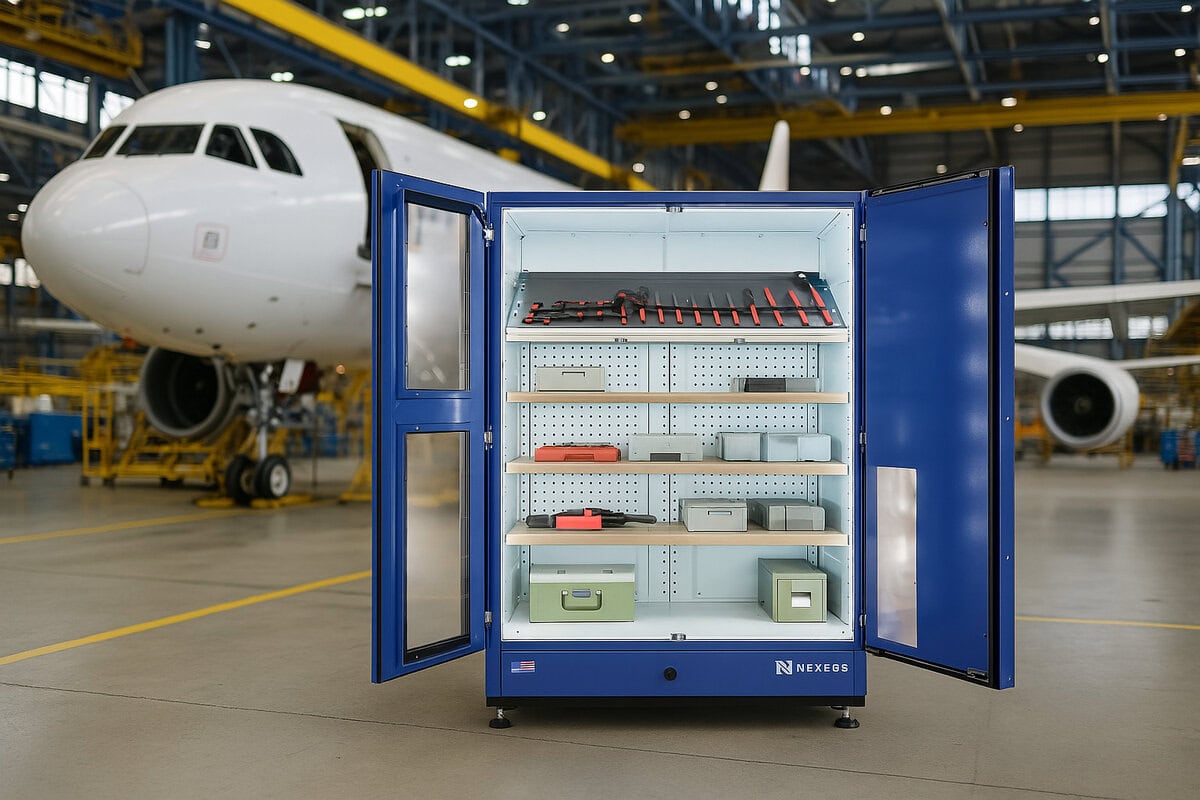
If you’re keen to understand the cutting-edge advancements in inventory management, particularly within critical sectors such as healthcare, you might have stumbled upon the term “RFID smart cabinet.” But, what is it, and why is it transforming inventory management practices? An RFID smart cabinet is an advanced storage system that employs Radio Frequency Identification (RFID) technology to seamlessly track and manage stored items. This innovative approach provides immediate visibility and precise tracking of inventory, proving to be an essential asset for hospitals, medical facilities, and other entities handling high-value or critical supplies.
At its core, an RFID smart cabinet transcends the traditional storage unit concept, evolving into a holistic inventory management system. It utilizes RFID tags, readers, and sophisticated software to continually monitor and refresh the status of items, ensuring efficiency and accuracy. This technology is pivotal not only in boosting operational efficiency but also in safeguarding patient health, minimizing waste, and enhancing resource utilization.
Understanding RFID Cabinets
The Basics of RFID Technology
To fully appreciate the functionality of RFID cabinets, it’s essential to understand the underlying RFID technology. RFID, or Radio Frequency Identification, is a contactless technology that uses electromagnetic waves to wirelessly transfer a digital ID and additional data between an RFID tag and a reader. This technology operates by using radio waves to communicate between the RFID tags and the reader.
The reader emits a radio frequency signal through its antenna, which activates the RFID tags within its range. These tags then capture the energy from the reader’s radio waves and transmit their unique identification data back to the reader.
Definition and Components of an RFID Cabinet
An RFID cabinet is essentially a storage unit that integrates traditional cabinet functionalities with advanced RFID technology to monitor, track, and secure the items stored within it. At its core, an RFID cabinet includes several key components :
-
RFID Readers and Antennas: These are embedded within the cabinet structure and are responsible for transmitting radio frequency energy to activate the RFID tags and receiving the data sent back by the tags.
The antennas can be integrated into the reader or positioned as separate components to optimize signal strength and coverage. -
RFID Tags: Each item stored in the cabinet is affixed with an RFID tag, which contains a unique identification number. These tags can be passive, active, or semi-passive, depending on the power source and application requirements.
-
Central Management System: This system processes and records the data transmitted by the RFID reader, providing real-time visibility into which items are in the cabinet and which have been removed. The central system can also integrate with existing inventory management software to ensure a cohesive approach to overall inventory control.
-
Access Control and Security Features: Many RFID cabinets come equipped with access control mechanisms, such as locking front doors that can only be opened by authorized personnel with the corresponding RFID credentials.
This adds an extra layer of security to protect valuable or sensitive items.
Understanding these components and how they interact is essential for leveraging the full potential of RFID cabinets in various applications, from healthcare to industrial settings.
How RFID Cabinets Work
- Tagging and Storage – The journey of an RFID cabinet begins with the tagging of items. Each piece stored within is equipped with an RFID tag, bearing a unique identification number. These tags, essential for the system’s operation, come in passive, active, or semi-passive forms to meet the varied needs of different applications.
Upon placing an item inside the cabinet, its RFID tag is instantly recognized by the system. This seamless detection ensures that every item is meticulously tracked and recorded within the inventory management system, maintaining an accurate and up-to-date inventory.
- Reading and Inventory Management – At the core of an RFID cabinet lies the RFID reader, paired with its antennas, seamlessly integrated into the cabinet’s structure. The reader emits continuous radio waves, activating the RFID tags on stored items.
These tags respond by reflecting the radio waves back to the reader, along with their unique identification data. The reader captures this data, forwarding it to a central management system where it is processed and logged in real-time. This sophisticated tracking mechanism provides detailed insights into the inventory, tracking each item’s presence in the cabinet, noting removals, and recording the timing of these events.
- Security and Access Control – Enhancing the functionality of RFID cabinets are their advanced security and access control capabilities. Access is typically granted via RFID tags, cards, or wristbands, embedded with encoded user identification information.
When an access attempt is made, the cabinet’s RFID reader scans the tag, verifying the user’s identity. Authorized users trigger the system to unlock the cabinet, granting entry. This process not only secures the contents but also logs each access event, creating a detailed audit trail. Additionally, many RFID cabinets are designed to send mobile alerts in the event of unauthorized access attempts, further bolstering security and ensuring accountability.
Applications and Benefits

Versatility Across Industries
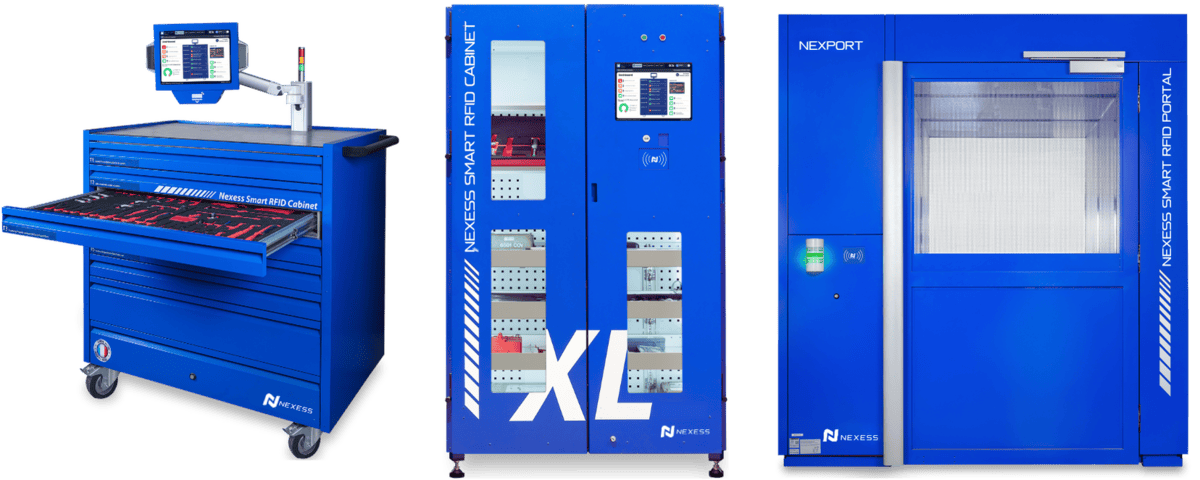
RFID cabinets boast an exceptional versatility, finding applications across numerous industries, all of which benefit from the unique advantages offered by this technology. In the healthcare sector, RFID smart cabinets play a pivotal role in managing high-value medical implants, surgical instruments, and other essential supplies. These cabinets automatically document when items are stored, retrieved, or returned, ensuring precise tracking of batch numbers and expiration dates.
In industries like aerospace and pharmaceuticals, RFID cabinets are instrumental in managing tools, spare parts, and electronic devices. For instance, the NexCap® XL RFID Cabinet is specifically designed to monitor hand tools, selected portable tools, and safety equipment, guaranteeing that all items are accounted for and properly maintained.
The same principle, applied to keys
An RFID cabinet doesn’t only manage tools. The NEXCAP® KeyCab electronic key cabinet applies the same approach to keys: each key is sealed to an RFID fob, users sign in with a badge or PIN, the keys they can take flash green, and every checkout and return is logged. A key returned to the wrong slot turns red. For more, see our key management system guide for industrial facilities.
Enhanced Inventory Accuracy and Efficiency
The adoption of RFID cabinets significantly boosts inventory accuracy and efficiency. By automating the inventory counting process, these systems reduce the reliance on manual counting, which in turn minimizes human error and saves labor time. This automation facilitates real-time asset counts and advanced inventory transactions, ensuring that inventory levels are consistently up-to-date and precise.
Furthermore, RFID technology delivers detailed information about each product, including batch numbers, expiration dates, and manufacturing details. This information is essential for efficient stock rotation and adherence to regulatory requirements, especially in sectors where traceability is paramount.
Cost Savings and Return on Investment
Implementing RFID cabinets also leads to substantial cost savings and a robust return on investment (ROI). By enhancing inventory accuracy, RFID systems reduce the discrepancies between the actual stock and recorded inventory, preventing stockouts and overstock situations.
This precision aids in optimizing stock levels, reducing waste, and enhancing overall operational efficiency. Moreover, RFID systems diminish labor costs associated with manual record-keeping tasks such as hand-counting inventory items. Research indicates that investments in RFID technology often yield high returns due to their capability to rapidly and accurately gather real-time asset tracking data, while also minimizing losses through improved asset visibility.
Conclusion
In conclusion, RFID cabinets represent a significant leap forward in inventory management and asset security. These smart cabinets automate asset tracking, eliminate human error, and provide real-time visibility into inventory levels. They enhance security through advanced access control features, ensuring only authorized personnel can access stored items.
Across various industries, including healthcare or aeronautic industries, RFID cabinets optimize business processes, reduce costs, and improve operational efficiency. By adopting RFID cabinet technology, organizations can streamline their operations, enhance accuracy, and safeguard valuable assets. Embrace this innovative solution to transform your storage and management practices for a more efficient and secure future.
FAQ
If an RFID tag or card used for accessing an RFID cabinet is lost or stolen, it could compromise the security and access control of the cabinet. The tag or card would need to be deactivated or removed from the system to prevent unauthorized access.
A new tag or card would then need to be issued and programmed to replace the lost or stolen one.
RFID cabinets ensure the security and integrity of stored items through highly encrypted RFID tags that are difficult to duplicate, access control features that only allow authorized personnel with corresponding RFID credentials to open the cabinet, and a system that logs all interactions and can send alerts for unauthorized access.
The RFID mechanism is also hidden inside the cabinet to prevent external tampering, and the system maintains detailed records of item movement and access attempts.
Yes, RFID cabinets can be integrated with existing inventory management systems or other software platforms. Integration enables data to flow directly into existing systems, enhancing inventory visibility, traceability, and workflow automation.
To ensure optimal performance of RFID cabinet locks, typical maintenance requirements include:
-
Regularly inspecting and cleaning the RFID readers and tags/cards to prevent dirt and debris interference.
-
Checking and replacing batteries in battery-powered locks as needed — batteries may last around 6 months to a year depending on the model.
-
Reprogramming RFID tags/cards if detection failures occur, and adjusting the proximity of the tag/card to the reader if necessary.
OTHER ARTICLES ON THIS TOPIC
What is RFID? Explanations and Applications in Industry
Have you ever wondered about RFID (Radio Frequency Identification)? This essential technology is widely used...
READ MOREJan