

 Français
Foreign Object Debris (FOD) is a critical concern in the Maintenance, Repair, and Overhaul (MRO) sector of the aviation industry. FOD refers to any substance, debris, loose hardware, or article that is alien to a vehicle or system and can cause significant damage.
In the MRO context, FOD can lead to minor repairs or catastrophic events, making it a major cause of aircraft damage and unscheduled maintenance. The presence of FOD in work areas, runways, or on aircraft can result in injuries, production delays, and safety violations, underscoring the importance of robust FOD prevention programs.
The term FOD covers two interrelated concepts: Foreign Object Debris and Foreign Object Damage. Foreign Object Debris includes objects like loose nails, tools, rocks, metal shavings, or even wildlife found in inappropriate locations that can damage equipment or injure personnel. Foreign Object Damage refers to the actual harm caused by these objects, which can impact both the physical and economic aspects, degrading the safety and performance characteristics of aircraft and other equipment.
This article highlights the importance of FOD prevention in MRO, the challenges in FOD management, and how Radio Frequency Identification (RFID) technology can bolster FOD prevention efforts. Understanding these elements is essential for implementing effective FOD prevention strategies to ensure safety, quality, and efficiency in your MRO operations.
The Importance of FOD Prevention in MRO

Financial and Safety Ramifications
The prevention of Foreign Object Debris (FOD) in Maintenance, Repair, and Overhaul (MRO) operations is essential due to its significant financial and safety implications. Financially, FOD can lead to substantial costs associated with unscheduled maintenance, repairs, and even the replacement of damaged components.
For instance, a single foreign object on a runway or in a work area can cause minor repairs or, in worst-case scenarios, catastrophic events that result in costly downtime and potential loss of aircraft or equipment.
From a safety perspective, FOD poses a critical risk to both personnel and aircraft. It can cause injuries, damage engines, cut aircraft tires, and prevent aircraft mechanisms from operating properly. The consequences of ignoring FOD can be fatal, as debris propelled by aircraft engines or tires can harm people in the vicinity.
Therefore, maintaining a FOD-free environment is essential for ensuring the safety of all individuals involved in MRO activities.
Regulatory Compliance
Regulatory compliance is another vital aspect of FOD prevention in MRO. Standards such as AS9146 provide comprehensive guidelines for organizations involved in the development, design, and maintenance of aviation and aerospace products. These standards emphasize the need for thorough risk assessments, continuous monitoring, and a culture of awareness and prevention.
Compliance with these standards is not only mandatory but also enhances safety and operational integrity by systematically addressing FOD risks at every stage of product development, handling, and delivery.
In addition to industry standards, many organizations have strict FOD control policies that must be adhered to. These policies often include specific procedures for housekeeping, barrier controls, and the designation of FOD-sensitive areas. Non-compliance with these policies can result in severe consequences, such as immediate removal from the facility, highlighting the importance of rigorous FOD prevention and control measures.
Current Challenges in FOD Management
Manual Tracking Limitations
One of the significant challenges in Foreign Object Debris (FOD) management is the limitations associated with manual tracking methods. Traditional approaches often rely on visual inspections, such as FOD walks, which are labor-intensive and may not be entirely effective.
These manual inspections can be time-consuming, especially when covering large areas like runways, taxiways, and aprons. Moreover, the human eye can miss small or hidden debris, particularly in complex environments or under adverse weather conditions.
Additionally, manual tracking methods lack the precision and reliability needed to ensure comprehensive FOD control. Tools and equipment can easily be misplaced or forgotten, leading to potential FOD incidents. For instance, tools with worn-out parts or those that are not properly secured can shed components that become FOD, highlighting the need for more robust and automated tracking solutions.
Lack of Real-Time Visibility
Another critical challenge in FOD management is the lack of real-time visibility into the presence and location of foreign objects. Traditional methods such as periodic sweeps and visual inspections do not provide immediate feedback, allowing FOD to remain undetected for extended periods.
This delay can lead to significant risks, as undetected FOD can cause damage to aircraft engines, tires, and other critical systems before it is discovered.
The absence of real-time monitoring also hampers the ability to respond quickly to FOD incidents. In fast-paced airport and MRO environments, the timely detection and removal of FOD are vital to preventing accidents and minimizing downtime.
Advanced technologies, such as AI-enhanced detection systems and RFID tracking, are increasingly being recognized as essential tools to overcome these limitations and provide the real-time visibility needed for effective FOD management.
How RFID Technology Enhances FOD Prevention
Automating Tracking and Accountability
RFID (Radio Frequency Identification) technology significantly enhances FOD prevention by automating the tracking and accountability of tools, parts, and materials. In MRO (Maintenance, Repair, and Overhaul) environments, RFID tags can be attached to tools and equipment, allowing for real-time monitoring of their movements and usage.
This automation ensures that tools are not forgotten in critical areas, such as engine compartments or on runways, which is a common cause of FOD incidents.
For instance, RFID-enabled systems can track when a tool leaves or returns to its designated storage, as well as who took it and where it was used. This level of accountability reduces the risk of tools being left inside aircraft during assembly or maintenance, thereby preventing potential FOD.
Real-Time Data Acquisition
RFID technology provides real-time data acquisition, which is essential for effective FOD prevention. By using RFID tags and readers, maintenance teams can instantly track the location and status of tools and parts. This real-time visibility helps in quickly identifying and recovering lost or misplaced tools, preventing them from becoming FOD.
Additionally, RFID systems can record every transaction, including tool calibration, maintenance, and usage history. This comprehensive data helps in predictive and preventive maintenance, allowing for early detection of wear or anomalies in tools and equipment, and triggering maintenance alerts before failures occur.
Integration with Existing Systems
RFID technology can seamlessly integrate with existing maintenance and inventory management systems, enhancing the overall efficiency of FOD prevention efforts. For example, RFID data can be synchronized with maintenance software to improve planning, minimize unplanned downtime, and ensure operational efficiency.
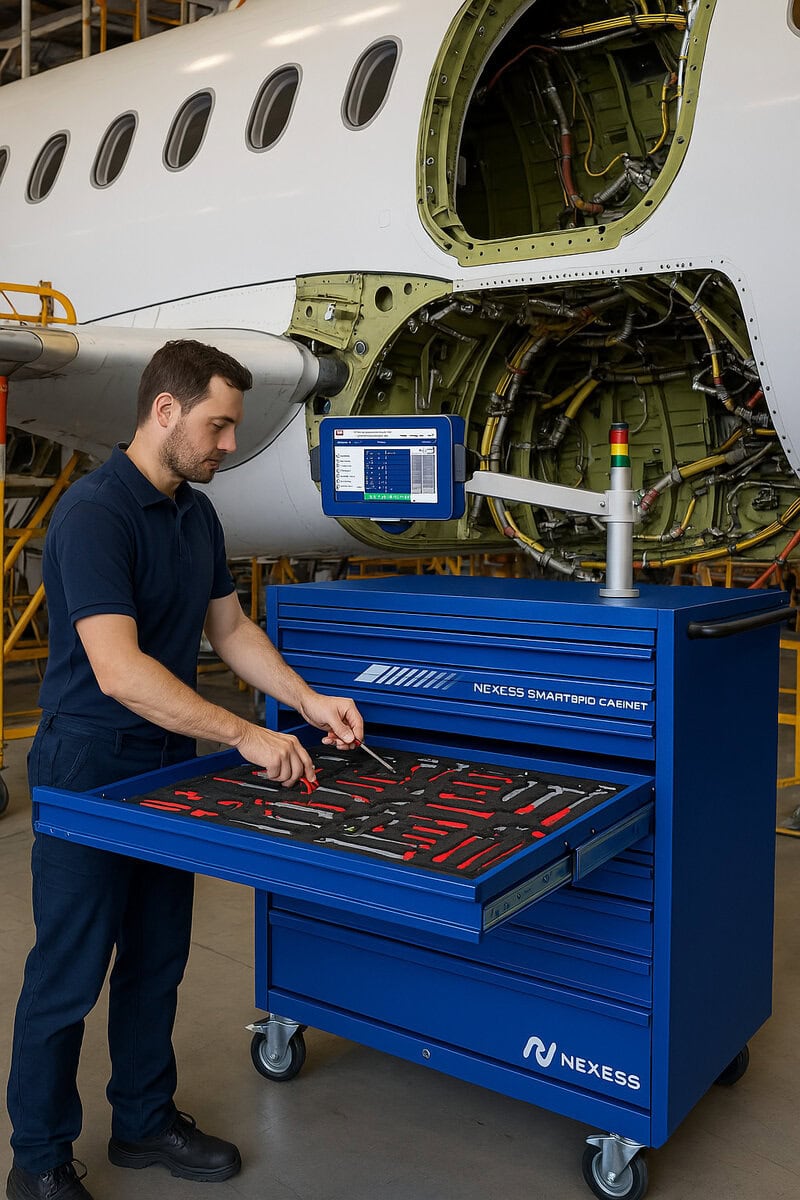
Moreover, RFID solutions can be combined with other innovative equipment such as specialized pouches, storage boxes, and tool trolleys to create a comprehensive FOD prevention ecosystem. These integrated systems ensure that tools are organized, secured, and tracked throughout their lifecycle, reducing the risk of loss or misplacement and enhancing safety, productivity, and quality in aerospace operations.

Conclusion
In conclusion, tackling Foreign Object Debris (FOD) is paramount in Maintenance, Repair, and Overhaul (MRO) operations due to its profound impact on finances, safety, and compliance. An effective FOD prevention strategy must encompass awareness and training, robust detection and removal techniques, alongside ongoing evaluation and enhancement. Leveraging RFID technology can greatly bolster these initiatives by facilitating automated tracking, delivering real-time data, and seamlessly integrating with current systems.
To achieve a FOD-free workspace, it’s essential to undertake comprehensive training, perform consistent inspections, and employ cutting-edge detection technologies. By making FOD prevention a top priority, organizations can ensure the safety of their personnel, the integrity of their equipment, and the efficiency of their operations.
Embracing proactive measures today is essential to averting expensive and potentially disastrous FOD incidents in the future.
FAQ
A successful FOD (Foreign Object Damage) prevention program in an MRO (Maintenance, Repair, and Overhaul) environment is built on several key elements :
-
Program Management: Commitment from top management and a designated program manager.
-
Operations: Processes designed to prevent, inspect, detect, and remove foreign objects, incorporating product design and operation sequencing.
-
Training and Personnel Access: Comprehensive training programs and strict access controls to ensure all personnel are informed and vigilant about FOD prevention.
-
Area Designation: Clearly designated areas with stringent access controls.
-
Product Protection: Utilization of protective devices such as bags, covers, and caps to safeguard against contamination.
-
Housekeeping and Clean-As-You-Go: A commitment to maintaining a clean workspace and adhering to regular cleaning practices.
-
Tool and Hardware Control: Strict accountability and control over tools, hardware, and personal belongings.
-
Incident Investigation and Feedback: Detailed investigation of FOD incidents and feedback mechanisms to enhance processes.
RFID technology significantly enhances tool tracking and accountability in MRO operations through real-time tracking, lifecycle monitoring, and proactive maintenance automation. It employs rugged UHF RFID tags embedded in tools for tracking locations, assigning tools to technicians, and ensuring no tools are left behind, thereby preventing Foreign Object Damage (FOD) incidents.
Handheld RFID readers and integrated software solutions are instrumental in quickly locating missing tools and ensuring compliance.
Employee training and awareness are essential in implementing effective FOD prevention practices in MRO. Training programs must cover potential hazards, safe work practices, and the critical importance of FOD prevention.
Recurrent training and education keep employee awareness high, and involving employees in hazard identification and risk assessment promotes proactive mitigation strategies. The training aims to increase employee awareness of FOD causes and effects, encourage active participation in daily routines, and foster a culture of cleanliness and discipline.
RFID tags are instrumental in inspecting inaccessible areas and preventing foreign object debris (FOD) in aerospace maintenance by tagging tools and components. These tags allow for real-time tracking with RFID readers, enabling maintenance personnel to locate tools in hard-to-reach areas, such as engine compartments or inside aircraft. If a tool is not returned to its designated storage, the system issues an alert, preventing potential FOD incidents.
Additionally, RFID technology streamlines inventory management and maintenance recording, ensuring all tools and parts are accounted for and minimizing the risk of foreign objects being left behind.
OTHER ARTICLES ON THIS TOPIC

Revolutionizing Tool Calibration Management with RFID-Based Solutions
In today’s fast-paced industrial landscape, the need for efficient and precise tool calibration management has...
EN SAVOIR PLUSJan

Use Case : How this airline MRO manage tool boxes with RFID ?
Challenges Manage autonomous access control to tool cribs Traceability of tool boxes used by operators...
EN SAVOIR PLUSJun

